Presenting circular economy concept in the context of tourism
When the COVID-19 crisis hit with a lethal blow to the status quo, a mix of supply and demand side megatrends, such as digitalisation, overtourism, GHG emissions, environmental and social impacts, customer and regulatory accountability demands, were increasingly raising questions about the industry’s linear growth-based model. While the COVID-19 pandemic is challenging long established economic constructs, it also presents a rare opportunity to change the economic ‘software’. A shift to a sustainable Circular Economy represents this major software update we urgently need.
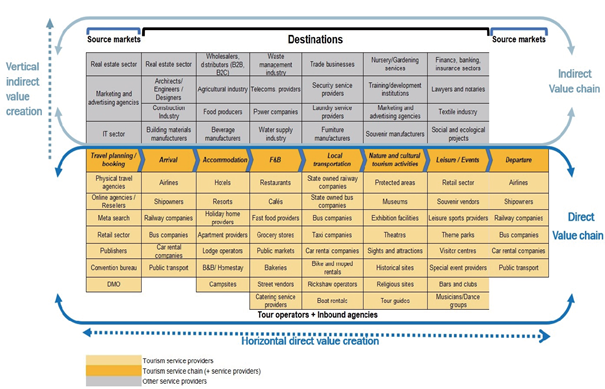
The tourism industry is deeply interlinked with and dependent on multiple key resource flows, asset and commodity value chains in society – from agriculture to food, to the built environment and transport industries to name a few. Travel and tourism actors can act as powerful enablers of circularity and benefit from shared circular value creation and value capture within relevant value chains.
The need for a new positive tourism paradigm regenerative of natural and social capital is pressing. The Circular Economy offers a compelling new paradigm and a set of tools to guide an innovative, balanced, resilient tourism industry recovery and sustainable future.
The tourism industry is a vast complex industry covering a variety of sectors and connecting with multiple other industries and value chains as we can see in the following table: