

Zero waste hotels and restaurants:
Tourism represents a major opportunity and an important part of the economy. Slovenia is positioned as a green destination, but these assets need to be preserved and cared for.
We encourage and involve hotels and other tourist accommodation in the transition towards a green economy and sustainable resource management through waste prevention, reuse and recycling. We have also developed comprehensive Guidelines for Hotels and Restaurants.

The introduction of the Zero Waste concept in hotels and restaurants has three main objectives:
1) Economic objectives: development of an operational management plan aimed at achieving savings by improving energy efficiency, reducing greenhouse gas emissions, reducing water consumption and reducing waste generation.
2) Training objectives: The training and education system of the service provider involves all actors (employees, guests and suppliers). The training is based on the integration of all aspects of sustainability and encourages the active participation of guests and employees.
3) Social objectives: To create a climate in the immediate environment that promotes public awareness of good environmental practices through the successful implementation of changes for guests, employees and suppliers.
The present guidelines thus provide accommodation providers with concrete steps on how to engage in the transition to a circular economy, ensuring:
- lower operating costs,
- higher satisfaction and a higher share of repeat guests,
- higher quality, better visibility,
- a reputation as an environmentally and socially responsible company,
- the opportunity to generate higher prices.

SLOVENIAN HOTEL
Hotel Ribno
May 2018, Hotel Ribno was awarded the Zero Waste Hotel title. The changes are visible in all areas of the hotel and its surroundings. Careful waste measurements have shown that the total amount of waste has been significantly reduced, as well as the proportion of mixed waste, which is now only 8% of the total waste generated, which is a remarkable result. In addition to management, all employees were involved in the change process and actively sought solutions and opportunities for improvement.
Results
- Mixed waste per guest/night in 2016: 0.1845 kg
- Mixed waste per guest/night in 2018: 0.0693 kg
- Mixed waste per guest/night in 2020: 0.0033 kg
- Share of separately collected waste in 2016: 81 %
- Share of separately collected waste in 2018: 92%
- Share of separately collected waste in 2018: 92.04%
The hotel has implemented the following measures to achieve the targets: separate waste collection containers throughout the hotel and the surrounding area, no more plastic bottles on offer, water only in bottles or jugs, no more food in small containers for one person at breakfast, more locally sourced produce on offer, communication boards and other messages throughout the hotel informing guests about the importance of zero waste, and recommendations on how to reduce the amount of food leftovers.
RIBNO ALPINE RESORT BECOMES THE FIRST RECIPIENT OF THE EUROPEAN ZERO WASTE BUSINESS CERTIFICATE
The European ZW Business Certificate, developed by MiZA under the auspices of Zero Waste Europe, is based on more than ten years of professional experience in the field and is aimed at different types of organisations. It encourages the introduction of efficient systems that save natural resources and enhances the external image. The ambitious certification process, based on the idea of reducing waste and exceeding the target of 90% of waste collected separately, consists of four steps (expression of interest, implementation, certification and annual improvements). It includes continuous support from expert mentors and contains both general and criteria tailored to different sectors (e.g. hotels, restaurants, events). One star represents good practice, two best practice at national level and three best practice at European level.

REUSE CENTRES
Waste prevention is the most effective way to increase resource efficiency and reduce the environmental impact of waste. It is therefore important that, on the basis of Directive (EU) 2018/851 of the EUROPEAN PARLIAMENT AND OF THE COUNCIL of 30 May 2018 amending Directive 2008/98/EC on waste, activities and measures are carried out to prevent waste. This involves promoting innovative business and consumption models that reduce the presence of hazardous substances in materials and products (use of second hand clothing), that extend the life of products and that promote their re-use, including through the establishment and support of re-use and repair networks.
Actions:
- Social enterprise networks,
- deposit schemes
- return and refill systems,
- promoting the refurbishment, refurbishment and, where appropriate, repurposing of products and through exchange platforms.
More efficient use of resources would also contribute to significant net savings for businesses, public authorities and consumers in the Union, while helping to reduce overall annual greenhouse gas emissions. Re-use is an opportunity to save resources and create green jobs, and is therefore ranked ahead of recycling in the waste management priority order.
Due to increasing consumerism, the amount of waste is growing, especially useful bulky waste such as furniture, sports equipment, household appliances, clothes, books, etc., which is no longer allowed to be landfilled due to the new directive.
Through the activities of the Re-use Centres, this waste can be recovered and repaired with innovative services and added value can be achieved through upcycling, which is also a trend worldwide. We integrate innovative closed-loop solutions into our processes. The products we manufacture are not mass-produced, but unique limited editions. They are aimed at consumers and businesses. We take surplus products and industrial waste materials, transforming them into new, usable products through the process of “upcycling”. Upcycling is the process of transforming materials destined for disposal into new products for higher value and environmental purposes. Reusing waste without destroying it requires much less energy, zero raw materials and a local manufactory.
CPUs make a primary contribution to waste prevention, preparation for reuse and reuse. From the point of view of a sustainable approach to resource saving, it is crucial to conserve the resource. Most of the products are sourced in Slovenia. Our task is how to preserve these resources, these raw materials. We focus on the material stream of bulky waste, electronics, clothing, furniture and other discarded products. Products that are identified as waste are directed towards preparation for reuse and then further use.
Re-use Centre Ormož


GOOD PRACTICE BY RADENSKA D.O.O.
Sustainable actions by Radenska
Sustainability commitments
At Radenska, caring for the environment and people has always been one of our key priorities. In the face of growing environmental challenges and its role in the markets of the Adriatic region, the company has adopted sustainability commitments that are the result of many years of effort and a responsible way of working within the group of companies. In the area of packaging, Radenska follows four rules – to be safe for health, to have the lowest possible carbon footprint, to be recyclable and to be returnable.
Examples of good company practice
Switching to more environmentally friendly corks

All Radenska Classic KV and Radenska Naturelle bottles have been switched to more environmentally friendly stoppers. Aluminium and plastic stoppers have been replaced by aluminium only. The benefits of the measure are a reduction in plastic waste and easier recycling of discarded corks.
The result: At least 10 t of plastic waste was saved annually.
Lighter bottles and corks at the OAZA PET Portfolio

One of the measures they are taking to help reduce plastic waste is to optimise the weight of plastic bottles.
The result: the introduction of the lighter plastic bottle and stopper in the OAZA portfolio has reduced the amount of plastic waste by just under 11t per year.
Electricity from renewable energy sources
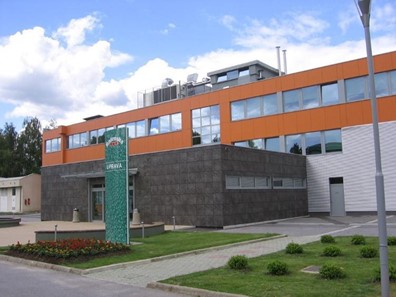
In 2021, Radenska obtained all the electricity used in its production and administration building from renewable sources.
The result: all electricity from renewable sources.
New 1L RGB (returnable) Pepsi bottle and new recycled bottle crate

Circular economy is not a new concept for Radenska. Radenci has been bottling returnable bottles since the beginning and today they represent almost 100% of our bottle portfolio. 97% of all our bottles in Slovenia are returnable. Returnable bottles are sorted, inspected, de-corked and then thoroughly washed before being refilled. Only bottles that are undamaged and spotlessly cleaned are returned to the shelves.
Pepsico was also impressed with the concept and in a joint project we launched the first Pepsi returnable 1L bottle on the Adria market in July 2022.
At the same time as the returnable bottle, we produced new plastic containers by recycling old, unusable plastic containers.
The result: reduction of plastic waste.