

Two related good practices from Hungary are presented. One is a system-level initiative and the other is a specific hotel.
Green Hotel Award, Hungary
Six decades ago, where is Kaunas lagoon, there was a normal life – there were 35 villages with 721 homesteads. 1960 after the construction of the Kaunas hydroelectric power plant, the people living in the valley were evicted, and the villages located there were flooded. The people who come from these areas call themselves “Bottomers” and until now, once a year, at the end of August, they remember their sunken houses. This year, the sculpture park “Climbing out of the water” was built here. The place of the sculpture was found in Samila Bay, and due to the extraordinary story of its origin, it immediately attracted enormous interest. You will find the coordinates of the bay for future trips.
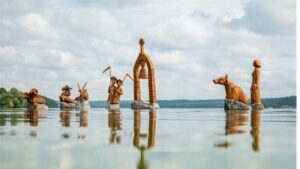
This is great example where history, culture and modern technologies were combined into a traditional festival which is attracting more and more visitors every year.
Links:
The House of Pots
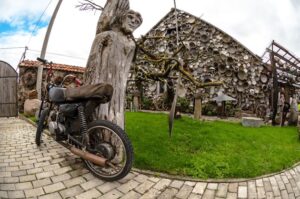
This house attracts visitors with its unusual appearance – all the walls of the house, part of the roof is covered with pots. The owner who lives in the original exterior house keeps a museum-worthy collection of antiquities behind a stone fence. The special place in it is occupied by the Torah found in Žagare. In various parts of the yard, the owner has unearthed items that he believes may have belonged to the previous Jewish inhabitants of this town. These are inlaid silver candlesticks decorated with plant motifs, a pot with 5 coins of various values, a wallet with paper banknotes. The house itself is a former Jewish shop, and under several layers of wallpaper there are still fragments of Jewish newspapers that the previous owners had used to cover the walls.
Links:
https://www.pamatyklietuvoje.lt/lankytinos-vietos/edmundo-vaiciulio-puodu-namas/1241
White Phosphogypsum Mountains
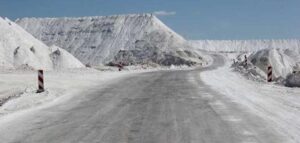
AB “Lifosa” white phosphogypsum mountains are a unique phenomenon not only in Lithuania, but also in the Baltic region. Phosphogypsum is gypsum with a small admixture of phosphates (fertilizers), which occurs during the production process of phosphoric acid. The mountains on the side of the fertilizer factory have been poured since 1968. Currently, 21 million tons of phosphogypsum have been accumulated. tons. About 5,500 tons of phosphogypsum are brought to the mountains every day, so they are replenished by about two million tons a year. Currently, the area covered by the mountains is about 84 hectares, some of which are 60 meters high. The previously formed mountains are now planted, covered with trees and grass. The phosphogypsum mountains are surrounded by ponds where flying cranes like to stay. The object is not visited, but the towering mountains can be seen at a distance of 5 kilometres.
Links:
https://www.pamatyklietuvoje.lt/lankytinos-vietos/lifosos-fosfogipso-kalnai/4470
The House on A Hen’s Leg
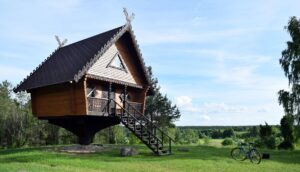
Near Merkinė, at the junction to the Alytus side, you can see a house on a hen’s leg on a hill. Many would hardly guess its purpose. This is the rest-stand-by place of the creative Merkinė fire-fighting team while looking after the forests of Dzūkija. The house has been standing for several decades and has recently been restored. There is a gazebo and an outdoor toilet nearby, making it an ideal place for a stopover.
Links:
https://www.pamatyklietuvoje.lt/lankytinos-vietos/namelis-ant-vistos-kojos/7868
For further reading:
https://opentextbc.ca/introtourism2e/chapter/attractions/
https://www.orioly.com/8-solutions-that-are-turning-cities-into-smart-destinations/#
https://www.wearemarketing.com/blog/tourism-and-technology-how-tech-is-revolutionizing-travel.html#


